Whether you’re vegan, bulking, or don’t want to use heat, living in the dorms doesn’t have to mean giving up home-cooked meals. College is a great time to learn basic cooking skills, how to maximize your grocery budget, and modify simple recipes to fit your lifestyle. These are three college-kid tested budget meals that use basic cooking skills and minimal dishes.
Cooking is really a form of problem solving. With proper planning and just a few foundation cooking skills, feeding yourself in the dorms doesn’t have to be expensive or complicated. For resources for finding fresh ingredients, check out the Tommie Shelf on the first Tuesday of every month and the University of St. Thomas Food Assistance webpage.
Souped-Up Ramen: vegan option, vegetarian option
Basic Cooking Skill: Building a balanced meal
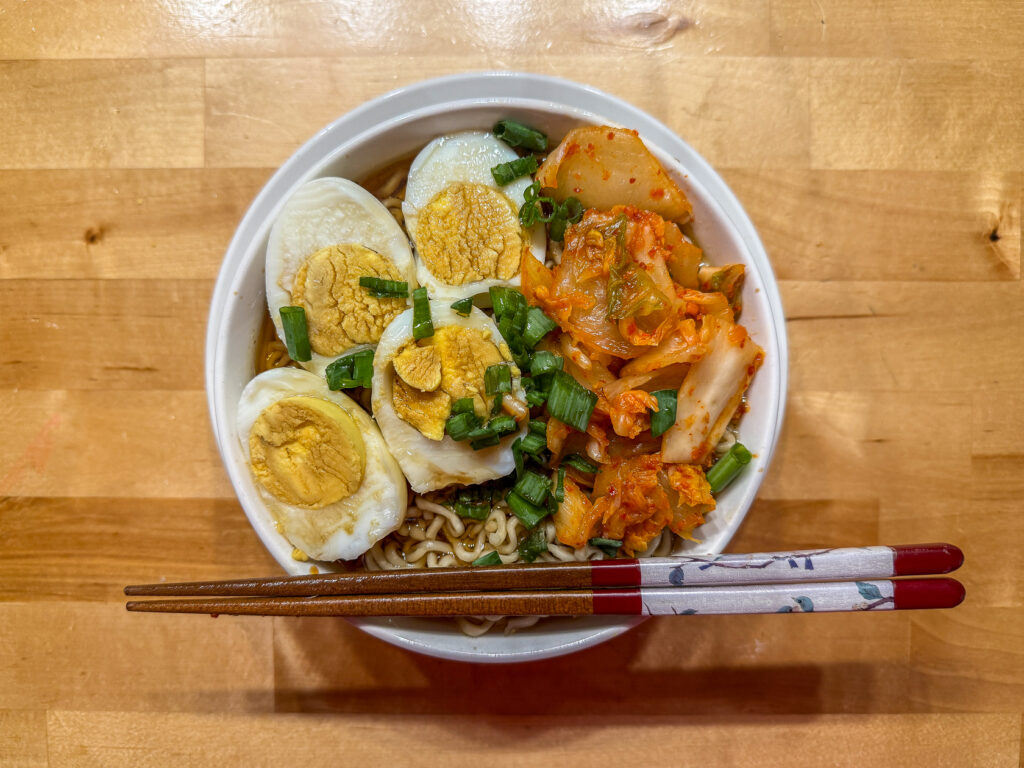
For just a couple extra bucks, you can take cheap instant noodles from broke-college-kid-core to a proper ramen bowl that’s both healthier and more delicious. A single pack of Maruchan Chicken Flavor Ramen includes just eight grams of protein, one gram of dietary fiber, and zero Vitamin D. But that doesn’t mean it’s unhealthy- just that it’s unbalanced.
This recipe is about adding things to a dish to balance its nutritional value, not taking things away. Ramen is a valuable source of carbs- your Maruchan brick includes 52 grams of it- making it a great option for pre-workout energy. There’s a reason marathon runners eat so much macaroni!
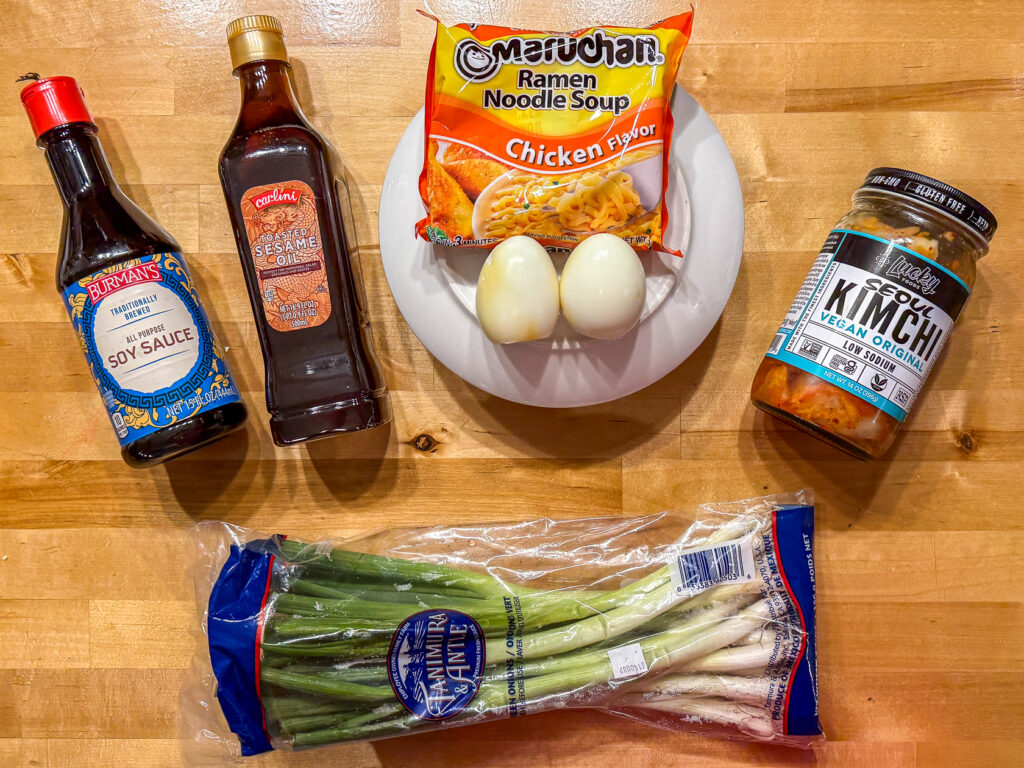
The Ingredients:
Instant-ramen packet
Green Onions
Eggs (sub or add: chicken or tofu)
Soy Sauce
Chili Oil
Kimchi (sub or add: frozen vegetables, mushrooms, bokchoy)
The Recipe:
The biggest difference in ramen from a restaurant is the broth. To round out the broth in your own cooked noodles, use half the seasoning packet and add a dash of soy sauce and sesame oil instead. The soy sauce will add a bit of flavor and saltiness, while the oil will thicken the soup base and add that distinctive umami flavor. Your broth immediately goes from thin and watery to rich and savory.
The next step is protein, critical to muscle growth. Protein slows down digestion of the carbohydrates from the noodles, helping your body retain energy for longer and preventing an energy crash directly after a carb or sugar-heavy meal. For meat eaters, try adding canned chicken to your noodles. As a vegan option, add cubed tofu as the noodles cook instead. My favorite options are jammy or hard-boiled eggs, which can be made on the stove or in an airfryer.
Boiled Eggs: Bring water to a rolling boil and lower eggs into the water, making sure they are completely submerged. For a softer center, leave them for about eight minutes. To harden completely, boil for 11. Turn off the heat, rest the eggs in the water for two minutes, then drain and peel.
Air-Fried Eggs: Set your air fryer to 270 degrees Fahrenheit. Cook for 11 minutes for jammy eggs or 15 for hard-boiled. Let rest for two minutes, rinse under cold water and peel.
Finally, add your vegetables. Add frozen veggies, fresh bok choy, or mushrooms to your bowl to steam with the noodles. For a bit of spice, I prefer kimchi. It’s often used with fish sauce, but is traditionally vegan. The fermentation process is similar to sauerkraut, and can help improve digestion. Garnish with green onions and your bowl of ramen is now a filling, well-balanced meal.
The key to building a nutritious and delicious ramen bowl is recognizing that ramen is customizable. At its core, it’s a noodle-soup base. These are just a few ideas for souped-up ramen. You can experiment with ingredients like miso, seaweed, or pork and never make the same bowl twice. Adding protein, veggies, and switching up your broth is an affordable way to make an easy, healthy ramen in the dorms.
Chicken Salad Sandwiches:no heat, no waste, on-the-go, one bowl
Basic Cooking Skill: Using up leftovers
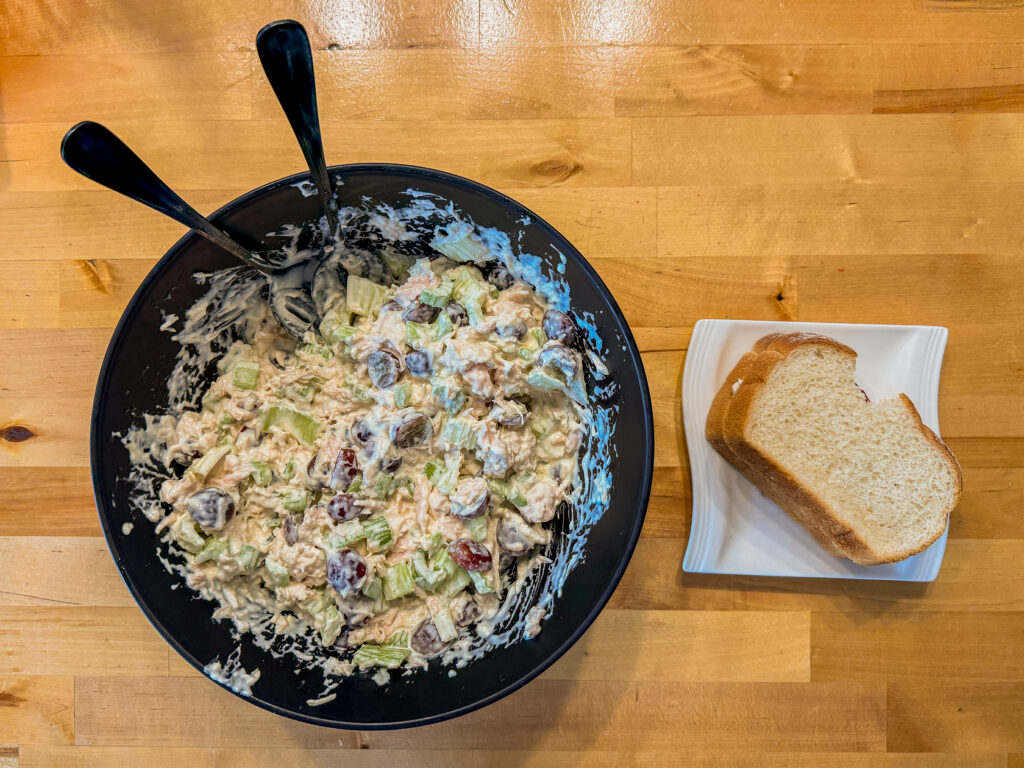
Chicken salad sandwiches are the perfect recipe for stretching your budget and avoiding the communal kitchens. Quick to make and easy to turn into a handheld meal or lunchbox of snacks, this recipe is also ideal for busy students. Store the chicken salad in the same bowl it’s prepared in to minimize dishes and simply measure everything to taste. If you’re tired of buying ingredients and having leftovers of specific products, use the extra for easy healthy snacks.
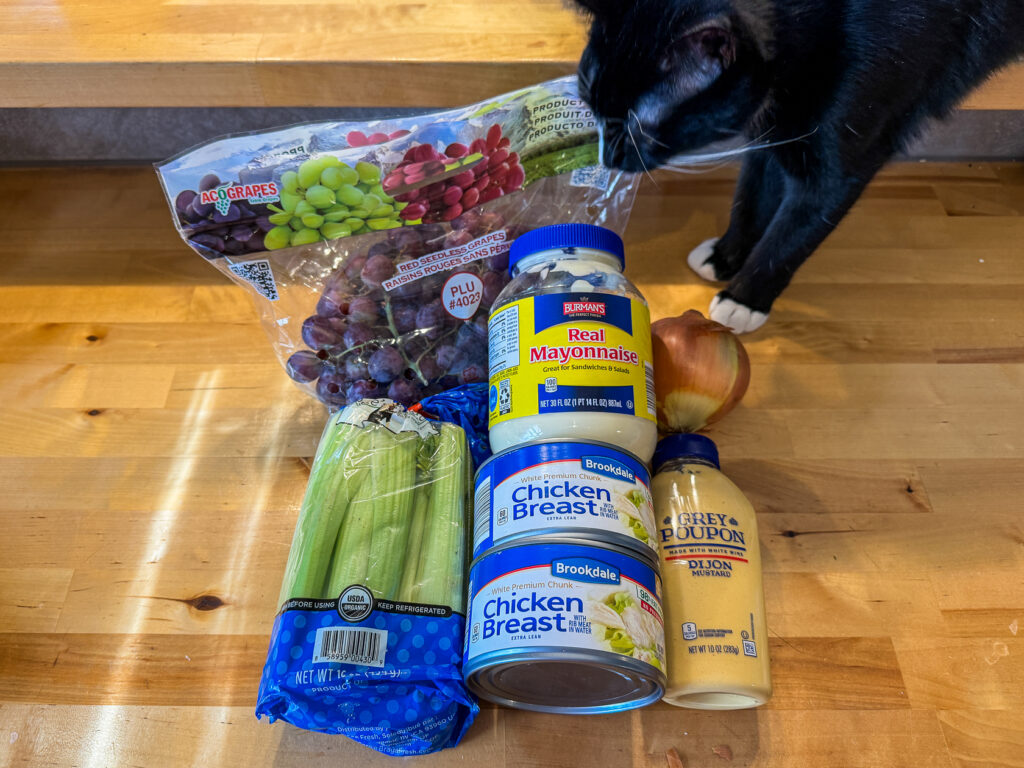
The Ingredients
Canned chicken
Mayonnaise
Dijon Mustard
Celery
Grapes
Yellow onion
Optional Seasonings: Supreme Salad seasoning, Dill, Salt, Pepper
Bread (sandwich or croissant)
Snacking Bonus Options:
Ranch
Peanut butter
Raisins
Jelly
Cheese
Salami
Crackers
The Recipe
In one bowl, drain and mix canned chicken with the grapes, celery, and onion. I like to cut my grapes into half, celery into hearts, and onion into cubes for even distribution. There is no rule about the right amount of each ingredient to add, but I use about a 4:2:2:1 ratio of chicken, grapes, celery and onions. Mix in mayonnaise and Dijon mustard to taste, and season with salt and pepper. Optionally, add dried dill and Supreme Salad seasoning. Spread your salad onto bread or enjoy straight out of the bowl.
A chicken-salad sandwich includes protein, fruits/veggies, and carbs- everything you need for a balanced, hand-held meal on the go. The leftover ingredients- celery, grapes, and bread- can be packed into a lunchbox or enjoyed as snacks. There are plenty of options to use every bit of the food you paid for.
Snack Options:
Celery: Fill with peanut butter and top with raisins for ants-on-a-log, or enjoy with ranch!
Grapes: Pair with cubed cheese, salami, and crackers for a diy-charcuterie board.
Bread: Add jelly to your shopping list for PB+J sandwiches in between chicken salad and ants-on-a-log.
Not only is this an easy and healthy recipe, it’s also an exercise in finding ways to use all of your ingredients and produce. Planning snacks and meals around ingredients you already have or are planning to buy will help you save money, reduce waste, and get the most out of your food.
Spaghetti: meal prep, bulking option, vegetarian option, gluten-free option
Cooking Skill: Sauteéing vegetables, seasoning your food

Boiling spaghetti and adding pasta sauce is easy, but it can also be boring. Spicing up your store-bought pasta and sauce is as easy as adding seasonings, veggies, and a little bit of protein.
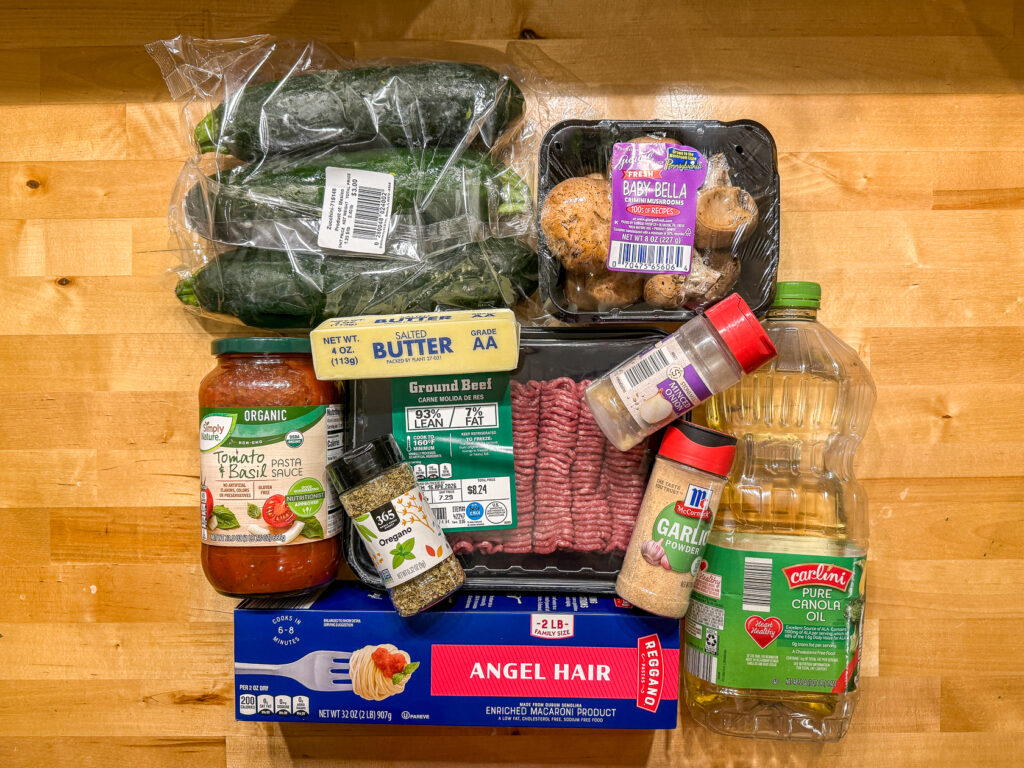
The Ingredients:
Pasta of choice
Ground meat of choice
Jarred pasta sauce
Veggies: Mushrooms, zucchini
Neutral oil or butter
Seasonings: salt, pepper, garlic salt, onion powder, oregano, basil
The Recipe:
For perfect store-bought spaghetti, always make sure to salt your water before boiling it and adding the noodles. When the spaghetti is finished, be sure to save a couple spoonfuls of the starchy water. This will help the pasta sauce stick to the noodles rather than sliding off. If you like your jarred pasta sauce the way it is, add it straight to the drained, hot noodles. For a little more flavor, add a little garlic salt and onion powder and dried herbs of choice. When seasoning food, a good rule of thumb is that if it smells good, it will taste good.
With just one extra pan, you can also add meat and vegetables to your dish. In my book, tomato sauce absolutely counts as a vegetable, but you can also sauté vegetables in a pan. This is a foundational cooking technique that can be applied to almost any vegetable and thin cuts of meat. To sauté the vegetables, add butter or oil to a flat pan on medium-high heat, enough to coat the chopped veggies. Softer vegetables like zucchini and spinach will cook much faster than tougher ones like broccoli and carrots, so I’m going to cook my mushrooms and zucchini separately.
Because mushrooms have a woodier, umami taste, I prefer to use butter for a richer flavor but oil will work as well. After slicing the mushrooms, toss them in the butter until well coated, season with salt and pepper, and cook on medium-high heat for about ten minutes or until brown and tender. “Sauté” means to toss. Because it works with relatively high heat, it’s important to keep the vegetables moving as they cook, either by literally tossing or using a spatula. Once the mushrooms are done, simply add them to your sauce and noodles.
After the mushrooms, cook the zucchini in oil. Zucchini will cook much quicker than the mushrooms. As soon as you notice the insides turning from white to translucent, immediately remove the pan from the heat. The whole process will take just three to five minutes. Cooked too long, zucchini will quickly turn mushy.
After sautéing the vegetables, the same pan can be used to cook the meat. Ground meat like beef or turkey can be an accessible way to add protein to a meal. Because the meat already produces its own grease, you don’t need to add extra oil to the pan. Simply add your ground meat to the pan and break it up with a spatula. Cook until golden brown on all sides, then add to your spaghetti.
Like the ramen recipe, spaghetti is a simple meal that can easily be modified to increase nutritional value. It can be made with gluten-free noodles or no meat for a Celiac or vegetarian-friendly option, and can be a good basis for learning foundational cooking skills like preparing vegetables and meat.
Evan Neubauer can be reached at neub6662@stthomas.edu.