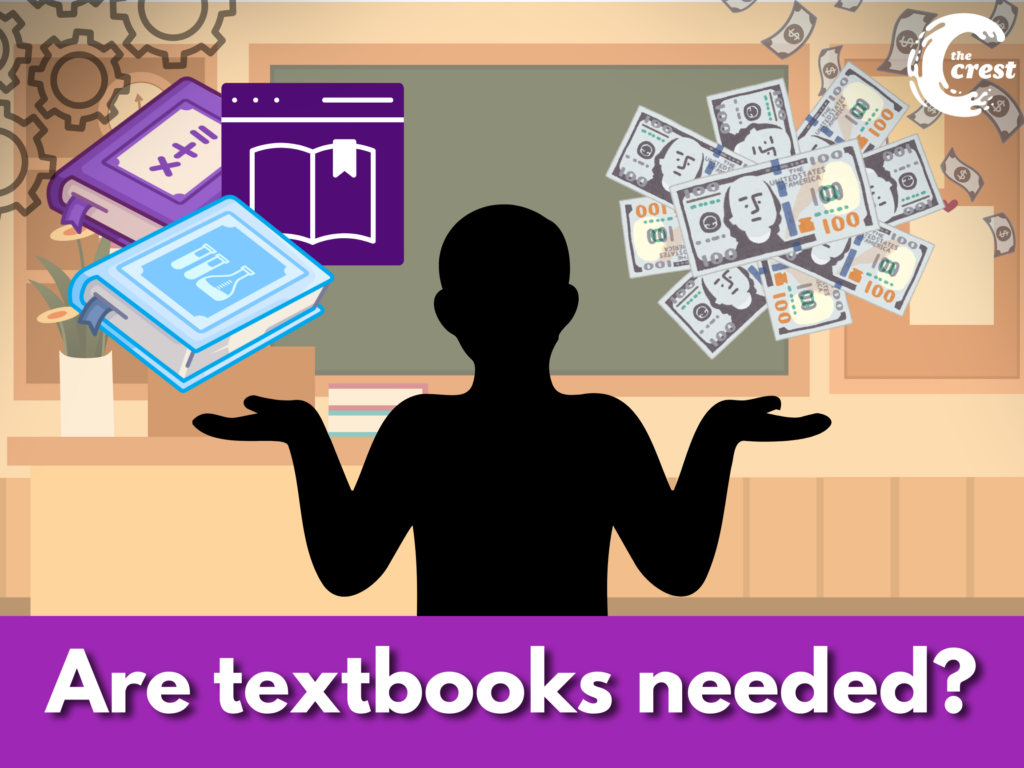
Challenges students encounter with the St. Thomas bookstore, including automatic billing and textbook costs, is a national trend among colleges, and inhibits students’ ability to succeed in class.
At colleges with campuswide billing systems, 50% of students said they didn’t know they were being billed, didn’t know they could opt-out, or were charged despite not wanting to be. Among schools with course-specific billing, 68% of students who knew they were being autobilled reported that they didn’t know they could opt-out or were unable to do so, according to a 2025 national survey by Student Public Interest Research Groups.
Sophomore Cristina Rodezno’s experience unknowingly purchasing a textbook reveals a disconnection between what professors know about automatic-billing for their course materials.
Along with receiving an unknown $30 charge from her operations & supply chain class, Rodezno was charged for a textbook that her professor later informed her the class didn’t require. The St. Thomas billing department said the textbook would have been selected by her professor and she was too late to opt out of paying.
“My teacher was just kind of confused, so that wasn’t helpful, like he didn’t know what it was about,” Rodezno said.
Rodezno said she was directed to talk with the bookstore, which further confused her because the textbook was purchased through her online tuition bill, leading her to question, “Who do I even ask?”
Rodezno said that she never got access to the materials but just paid for it and moved on.
The accessibility of textbooks on campus is further hindered by professors’ preferences for a physical book.
“I think we found the physical, like the digital book, online for free. He just wanted us to have a physical one,” Rodezno said in reference to a book she purchased for a philosophy class.
Rodenzo chose to buy the book from Amazon and missed having it the first week of class instead of buying the more expensive option through the bookstore where it would arrive faster.
“I only buy it through the school if I can’t find other options,” Rodezno said. She first tries Amazon, Google, or the St. Thomas library.
Junior Ben Johnston described the importance of buying textbooks for classes as students’ responsibility.
“We know beforehand, going into college that that’s going to be something I personally have to take care of,” Johnston said.
Rodezno acknowledges this commitment to learning students make in attending college.
“I’ll be somewhat disappointed when I see that a textbook is so expensive, but if I’m told that I need to buy it, I’ll buy it,” Rodezno said.
However, Johnston says acquiring cheaper alternatives should be pursued.
“If there is an opportunity for change and if there are ways to provide for those who genuinely cannot rise to that responsibility for whatever reason it will be, we ought to have those provisions in hand,” Johnston said.
Bernard Brady, a theology professor at St. Thomas, explains why he prints out readings for his students.
“For me, it’s really important that students have the text in front of them when we talk about it in class,” Brady said.
The way Brady uses texts for learning, he describes, is by frequently referring to specific passages for further analysis.
Like Brady, Johnston said he also prefers physical readings.
“The book is a really good thing to have, because you take that with you for the rest of your life,” Johnston said. “If it’s a bunch of articles that were scanned onto Canvas, I don’t get that when I graduate.”
Johnston, who said he pays upward of $200 a semester on textbooks, expresses his frustration with online options, especially those where access expires.
“If I’m paying that much for something, I want to have it be permanently mine,” Johnston said.
The overwhelming conclusion from Johnston and Rodezno is that the justification of paying for textbooks is tougher when students don’t get to use it or keep it.
“You kind of just have to accept it,” Rodezno said.
On the other side of students’ barriers to textbook accessibility, Brady explains his solution. Roughly three or four semesters ago, he started providing textbooks for two of his theology courses, which he says are used by three students per course on average.
“I realized that some students didn’t have the book, and I didn’t ask them directly, but I said, ‘Well, if anybody needs the book, just let me know, send me an email,’ and I just leave them out here,” Brady said, referring to where he leaves textbooks outside his office.
Brady thinks of textbooks as tools students need for class, and recognizes how his ability to provide them helps him teach.
“It’s better for me to have them have the book,” Brady said. “I want them to learn, I want them to read. I want them to think.”
When asked how she felt about a professor providing free textbooks for his students, Rodezno expressed her appreciation, especially considering how little options there are to get around buying textbooks.
“I wouldn’t even think of telling my teacher that I couldn’t afford it,” Rodezno said. “Like I would probably talk to my parents before I would talk to a teacher, just because I wouldn’t ever expect them to want to pay for it.”
Student’s financial inability to access textbooks and the limited ways professors can help, combined with the inefficiency of both the systems used to pay for them and how they’re utilized in class represents a larger social justice issue.
According to the survey by the Student PIRGs, while 36% of students surveyed nationwide were in courses that only assigned free materials, 32.5% of all students surveyed said they worked more hours, skipped meals, or delayed paying bills to afford textbooks.
The current college textbook environment’s shift towards an increase in online resources, little leeway for cheaper options, and colleges’ use of automatic billing means harder financial burdens on students.
Johnston described what being ready to learn as a student, and what providing an education as a faculty member means.
“It’s a joint responsibility to ensure that knowledge gets communicated,” Johnston said.
Leila Montoya can be reached at mont1761@stthomas.edu.