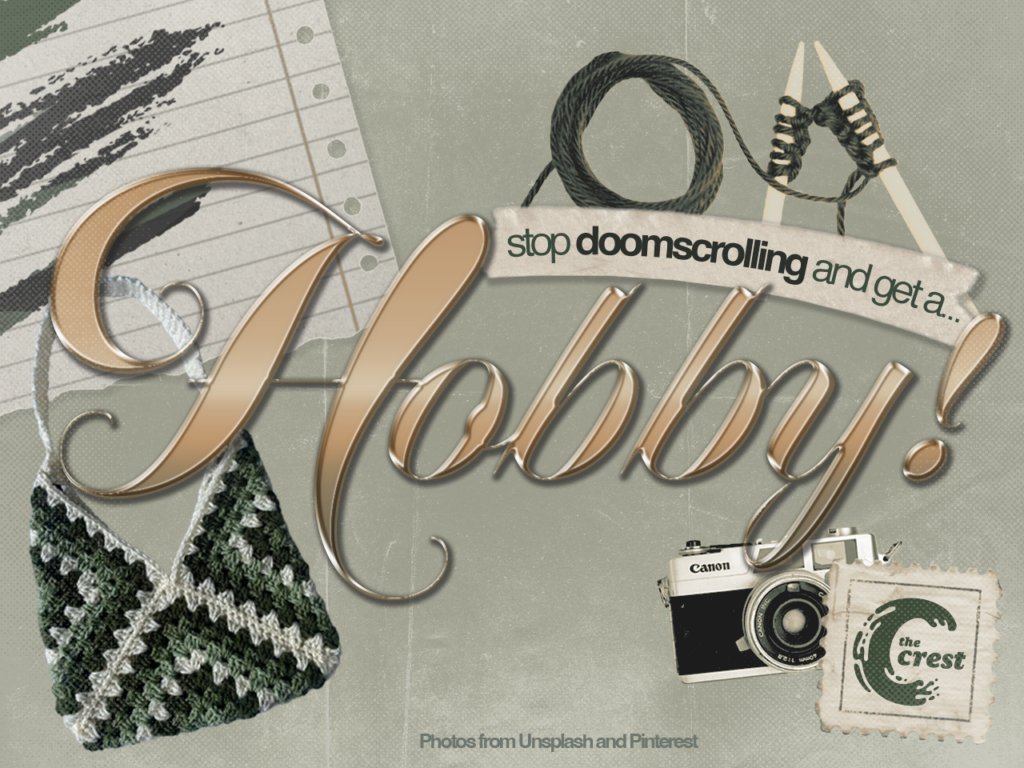
TikTok users are ditching their Google calendars for paper planners, snapping pictures with film cameras instead of their iPhones and picking up their long-forgotten crafting supplies.
This lifestyle trend of “going analog” is all about slowing down, getting off phones and promoting hobbies that take place in real life. Despite this trend starting on social media, St. Thomas students are putting them into practice, create[space] Director Amanda Cashman said.
“Sometimes I think those trends on TikTok or social media may bring them in here,” Cashman said. “If they’re seeing it online, they’re coming in to create it offline.”
Going analog can seem counterintuitive, for a trend that started on social media and is trying to get people off of it. Sam Courtright, a behavior change specialist at the Center for Well Being, said that concerns about phone usage are not new.
“At our Digital Health Summit a couple weeks ago, we had a brief survey where we were asking people about their phone use,” Courtright said. He added that 100% of the survey’s respondents expressed concern that other people are addicted to their phones.
As for what to do in response, Courtright’s best tip for ending doomscrolling was simple: “Replace it with something else.”
The create[space] offers free crafting supplies and events for St. Thomas students throughout the school year. Senior Abby Paulino, who created flower bouquets with a friend in the create[space], said she noticed that she spent less time on her phone, with some exceptions.
“It’s more of Pinterest, if needed, or really, if you’re with your friends, just chatting it up and being in the moment,” Paulino said.
Student create[space] worker sophomore Rylie Butler, who is in tune with “every social media trend that has anything to do with glue and rhinestones,” remembers when going analog became popular at the beginning of the year.
“I remember first seeing it. People will do journals of movies they watch, and print out different pictures and cut them out,” Butler said.
Gen Z is going analog by creating physical media, doing crosswords and forming creative hobbies to end the doomscrolling. This could look like buying a digital camera to take pictures or grabbing some puzzles from a thrift store, observed Guardian US columnist Tayo Bero.
Going analog doesn’t end with digital minimalism paired with crafting hobbies. According to a report by Dominik Schery at the University of Siegen, Germany, there is a sense of “analogue nostalgia,” especially for Gen Z, who grew up using physical media.
Butler noted that when students are in the create[space], they typically aren’t on their phones.
“Technology isn’t in this space very much,” Butler said. “It’s a really cool space to connect through creativity and building community through creativity without technology.”
Courtright said that engaging in activities like crafting promotes a greater awareness of how people spend their time.
“I think there’s something to be said for having something physical to show for the time that you’ve spent doing something,” Courtright said.
Cashman said that students are “connecting, building that sense of community that we want at St. Thomas, all while being off their phones.”
“They’re going 90s, which as a millennial, hit my heart because we didn’t have social media,” Cashman said. “Going 90s, that’s analog life, so it’s cool that some folks your age are interested in doing that.”
Grace Woelfel can be reached at woel8456@stthomas.edu.